Showcase Exhibits

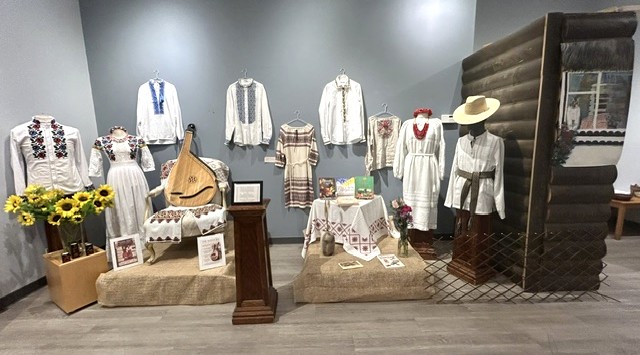
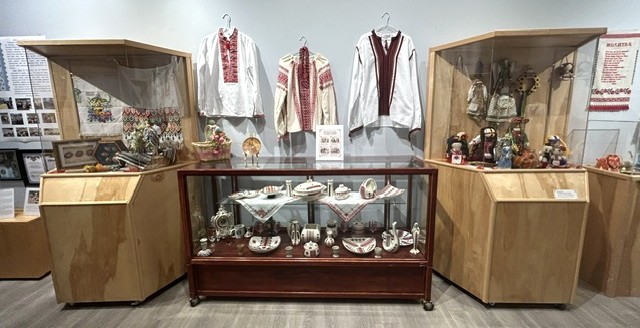
The Showcase Exhibit at the Jasper-Yellowhead Museum is a dynamic and ever-evolving space that showcases the rich cultural tapestry of Jasper. This versatile gallery breathes life into history and art, hosting an array of exhibits that captivate visitors year-round. From the enchanting annual Festival of Trees, where holiday magic fills the air, to exhibitions spotlighting the talent of local artists whose works reflect the region's breathtaking landscapes and storied past, the room is a canvas of creativity and heritage.
Current Exhibit
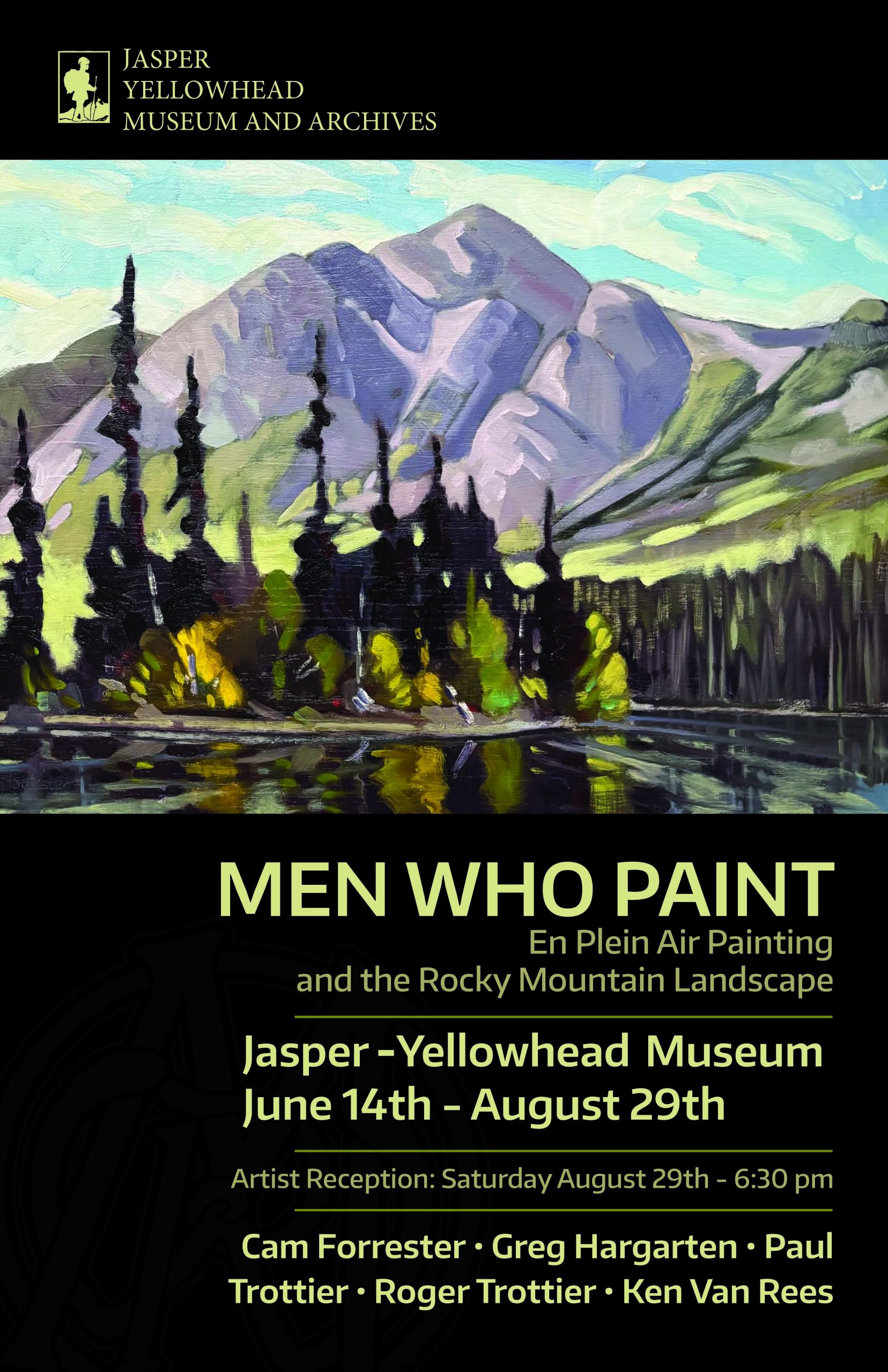
MEN WHO PAINT
En Plein Air Painting 
and the Rocky Mountain Landscape
Over the past twenty years, the collective known as Men Who Paint has reaffirmed the continuing relevance of plein air practice within the Canadian landscape tradition — the act of painting in the great outdoors. Their paintings of the Canadian Rockies, produced in response to shifting light, weather, and terrain, situate this group of Saskatchewan artists — Cam Forrester, Ken Van Rees, Greg Hargarten, Paul and Roger Trottier — within a long lineage that begins with the wilderness paintings of the ‘Railway School’ of Canadian artists, Tom Thomson and the Group of Seven. As witnesses to the beauty and wonder of the Canadian Rockies, the Men Who Paint are worthy heirs to this tradition.
Historically, the mountain imagery associated with Canadian landscape painting has oscillated between monumentality and intimacy. Many of the images tend toward the romantic and heroic, framing the Rockies as symbols of national spirit and aspiration. The Men Who Paint, by contrast, treat the Rockies as a place to be experienced; their paintings privileging reflection over spectacle, while emphasizing authenticity and distilling landscape into a measured visual language that respects and chooses presence over idealization. 
United in method and fellowship, the Men Who Paint bring other sensibilities to their Rocky Mountain paintings. Shaped in part by a prairie perspective — one attuned to more expansive spaces and subtle chromatic variation — they are sensitive to the verticality and drama of the mountain landscape. Some emphasize structure and geology through strong design and tonal clarity; others favour a more lyrical response, using expressive colour and gestural brushwork to register atmospheric change. Collectively, their paintings establish a dialogue between permanence and transience.
Over two decades of cross-country travel and ongoing observation, the group’s repeated journeys west have situated the Rockies — Jasper, Banff, Yoho, Kananaskis, Mount Robson, and Canmore — within a larger national landscape that links mountains and foothills to plains and coastal waters. In doing so, the Men Who Paint contribute to an evolving artistic tradition rooted in deep engagement with the land. Yet their paintings also highlight the importance of direct sensation and quiet reflection. By observing and capturing the delicate light and shadows on a distant sierra, the turquoise calm of a glacial lake, and the tumbling cascade of a mountain waterfall, they remind us that landscape painting endures not as nostalgia but as revelation: a shared language through which we learn about both the land and ourselves.
Bohdan Kordan, Professor Emeritus
University of Saskatchewan


Who We Are and What We Do 

The Men Who Paint is a group defined by shared experiences and a commitment to painting directly from the land. For more than two decades, we have worked together across Saskatchewan and throughout Canada, rooted in the discipline of plein air painting and in an ethos that values attention over uniformity. What binds us is not a style, but a collective way of seeing, refined through conversation and the experience of working side by side.

The Canadian landscape forms both the subject and the foundation of our work. For each of us, landscape carries a different meaning—inheritance, belonging, or discovery—but it remains central to how we understand ourselves as painters. The prairie horizon, the forests, mountains, and the country’s coastal edges all contribute to a visual and emotional vocabulary that unites us. Our travels across Canada are not incidental. They are essential to our practice, helping not only to define us but also to situate us within the tradition of Canadian landscape painting. 

We do not approach landscape as something distant or detached. We work from within it, focusing on its offerings. The land, in this regard, is never empty. It carries the marks of weather, time, and human presence—subtle indications that form both our perception and response. Painting, therefore, becomes a process of translation, an effort to render not only what is visible, but also what is felt.

Our work begins outdoors, where conditions are variable and time is limited. To paint en plein air is to work within the constraints of changing light and weather, and the immediacy of the moment. These conditions shape our work in fundamental ways; decisions must be made quickly as a scene evolves. What, then, emerges is inseparable from the circumstances of the making of a painting.

This approach demands both discipline and trust. Observation must be direct, and the movement from eye to hand spontaneous. In the field, there is little room for hesitation or revision. The process relies on instinct developed through repetition and experience. No matter how quick, each brushstroke is deliberate and considered, borne of years of painting in situ. Yet, painting outdoors is not simply a developed skill; it is also about striking a balance between attention and confident expression, filtered through the passion and desire of capturing a moment in time and space.
If landscape is our subject and plein air our method, fellowship is the structure that sustains our work. Over the years, our collaboration has taken the form of a conversation that unfolds through shared travel and effort, as well as the exchange of views. These experiences have fostered a durable sense of brotherhood, deepening both our individual practices and collective understanding of the land. 

Working together in proximity, we are in constant dialogue. However, we are not defined by sameness. We paint independently, and our approaches differ. Yet, it is in these variations that there is coherence—a tapestry of distinct voices shaped by a commitment to the Canadian landscape and one another.

Saskatchewan remains our point of origin and a place of inspiration. Our work, as a result, is shaped by the prairie’s vast horizons and living skies—conditions that demand clarity and attention. But our practice also extends outward, forming a network of encounters with the country. In these encounters, we are committed to the act of seeing. In doing so, we seek to represent the land and to understand it more fully. In the process, we also look to find our place within it.

The Men Who Paint are Cam Forrester, Greg Hargarten, Paul Trottier, Roger Trottier, and Ken Van Rees.

Past Exhibits

Add Your Heading Text Here